
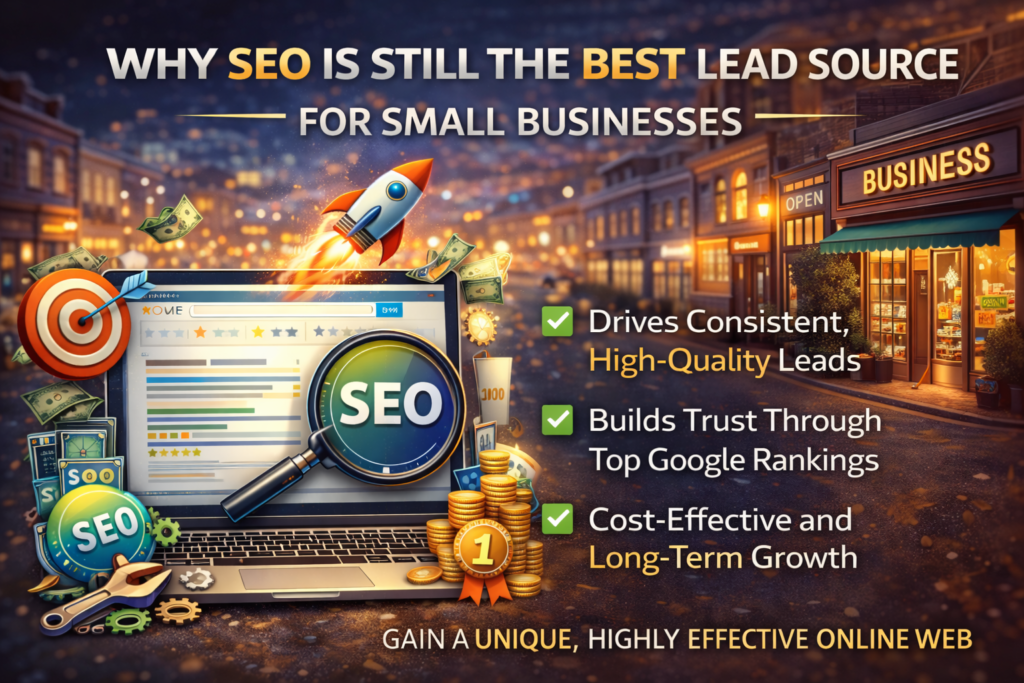
Why SEO Is Still the Best Lead Source for Small Businesses
Introduction (SEO + Intent Optimized)
For small businesses, marketing budgets are limited and every investment must deliver measurable returns. While paid ads and social media may bring short-term visibility, they rarely offer sustainable growth. This is where SEO for small business stands out as the most reliable and cost-effective lead generation channel.
SEO focuses on attracting customers who are actively searching for your services. Instead of interrupting people with ads, SEO positions your business exactly where demand already exists—on search engines.
How Small Businesses Get Found on Google
When potential customers need a product or service, their journey usually starts with a search query such as:
- “SEO services near me”
- “WordPress developer for small business”
- “digital marketing agency for startups”
SEO ensures your business appears when users search with high intent. Unlike social media browsing, search traffic consists of users already looking for solutions.
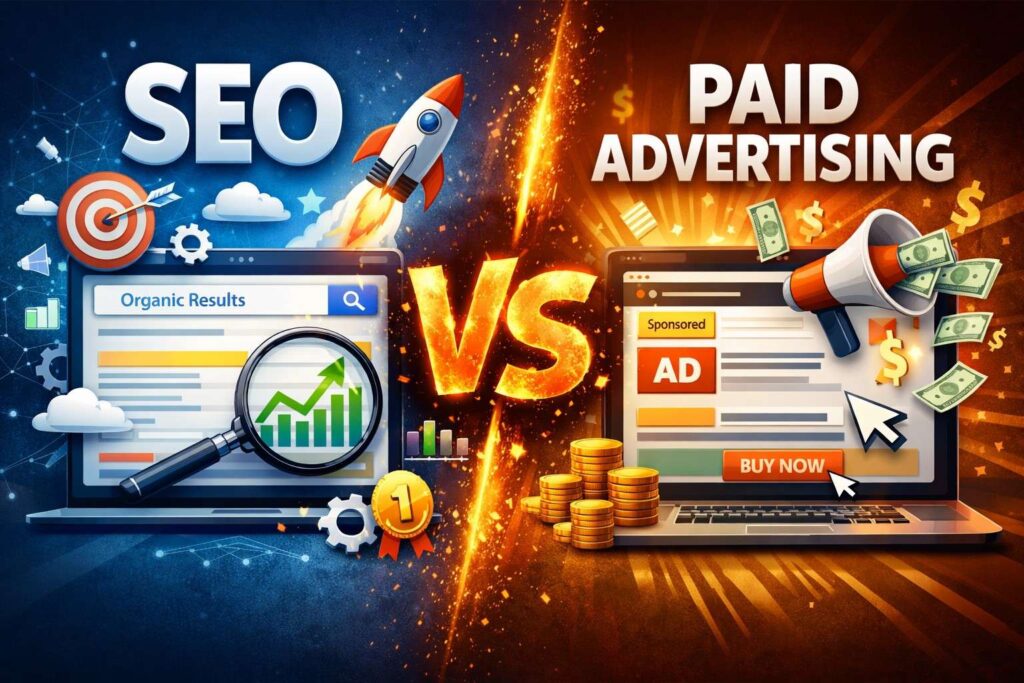
SEO vs Paid Advertising for Small Businesses
Many small businesses rely heavily on paid advertising, but this approach has limitations.
Paid Advertising Limitations
- Traffic stops the moment the budget ends
- Cost per lead increases over time
- Lower trust compared to organic results
SEO Advantages
- Long-term visibility
- Compounding traffic growth
- Higher trust and credibility
- Lower cost per lead over time
SEO is not about quick wins—it is about building a sustainable growth engine.
How SEO Generates Consistent Leads for Small Businesses
SEO works because it aligns with user intent. A strong SEO strategy focuses on three key areas:
1. Local SEO
Local SEO helps small businesses:
- Appear in Google Maps
- Rank for location-based searches
- Attract nearby customers
Optimizing Google Business Profile and local keywords significantly improves visibility.
2. Service-Based Keywords
Service-focused keywords target users ready to take action, such as:
- “SEO services for small business”
- “website redesign company”
These keywords bring traffic that converts.
3. Problem-Based Searches
SEO also captures users searching for solutions, such as:
- “why website not ranking”
- “how to get more leads online”
Problem-based content builds trust and guides users toward your services.
Why SEO Is Ideal for Small Business Budgets
Unlike large enterprises, small businesses need marketing channels that provide maximum ROI. SEO offers:
- Predictable long-term results
- Reduced dependency on ads
- Increased brand authority
- Scalable growth without proportional cost increases
Once your website ranks, traffic continues to flow without paying for every click.
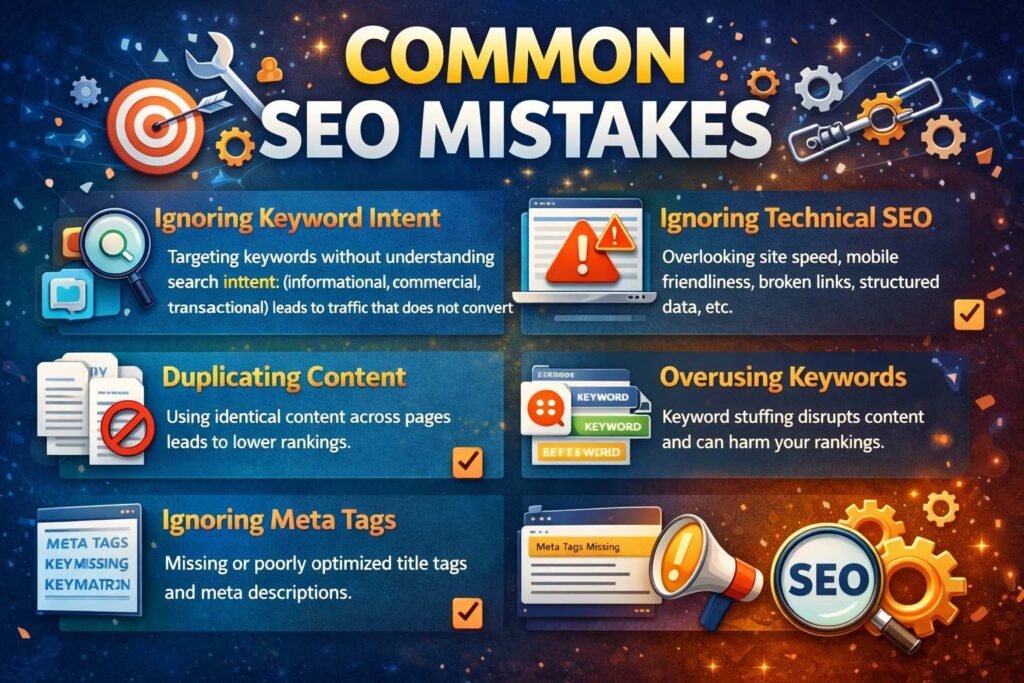
Common SEO Mistakes Small Businesses Make
Many small businesses fail at SEO because of unrealistic expectations or poor execution.
Common SEO mistakes include:
- Expecting instant results
- Targeting highly competitive keywords
- Ignoring technical SEO
- Publishing low-quality or generic content
- Inconsistent efforts
SEO rewards consistency, clarity, and patience.
FAQs
Is SEO worth it for small businesses?
Yes. SEO provides long-term visibility, higher trust, and lower cost per lead compared to paid ads.
How much should a small business invest in SEO?
Investment depends on competition and goals, but SEO typically delivers higher ROI over time than paid advertising.
Can small businesses compete with big brands using SEO?
Yes. With local SEO, niche targeting, and quality content, small businesses can compete effectively.
Does local SEO matter for service-based businesses?
Absolutely. Local SEO is one of the strongest growth drivers for small businesses.